Storm-Proofing the Future: How Do We Pay for Flood Control?

Last year, three major hurricanes – Debbie, Helene, and Milton – had a huge impact on our city. Debby was a near 100-year storm event, dropping almost 12 inches of rain in parts of the city in 30 hours, and generating a 3.4-foot surge. While Hurricane Helene landed 172 miles north of St. Petersburg, it generated a surge as high as 7.2 feet in some areas. Hurricane Milton was predicted to generate a devastating surge of as much as 10 to 15 feet. Fortunately, Milton wobbled to the south, and Tampa Bay instead experienced a 3-foot negative surge rather than total devastation. Nevertheless, our city experienced a record “1,000-year” rainfall event with 18.75 inches of rain falling in parts of the city in 24 hours. Collectively, these mega storms resulted in the flooding of some 15,000 homes and many businesses.
Climate Warming and More Intense Storms
A major cause of these more frequent, record-breaking mega storm events is climate change. A 2022 study by Ryan Harp of Northwestern University documented that over the last 30 years, the Eastern United States, including Tampa Bay, experienced a 4.5% to 5.7% increase in average daily rainfall. Tampa saw over 80 inches of rain in 2024, making it the wettest year on record. Many other locations in the Bay area saw above-normal rainfall.
According to the World Metrological Organization, 2024 was the warmest in recorded history. In fact, the last 10 years are the warmest years on record. According to the Florida Climate Center at Florida State University, the 2024 Florida summer ranked as the state’s warmest. They also report that between 1970 and 2024, the spring months (March-May) in Pinellas and Hillsborough counties warmed by 3.6 degrees. The Tampa area experienced an average of 37 more days with hotter-than-normal spring temperatures. That’s the second highest for an urban area in the United States, and the records continue to break.

Also in 2024, the Gulf of Mexico was the hottest in recorded history, reaching nearly 90 degrees. The hotter the Gulf waters, the greater the chance of intense storms. Warming water also contributes to sea-level rise. Studies by climate scientists at the Universities of Arizona and Tulane report that from 2010 to 2022, Gulf of Mexico sea levels rose nearly five inches, twice as fast as previously predicted.
While 2024 brought new temperature records and unseen storm impacts on the Bay area, 2025 could be worse. The 2024 Atlantic hurricane season was above average with 18 named storms, including 11 hurricanes and five major hurricanes. For 2025 the National Oceanic and Atmospheric Agency (NOAA) forecasts 13 to 19 total named storms; of these, 6 to 10 are forecast to become hurricanes, including three to five major hurricanes.
The probability of intense storms, hurricanes, and surge is significantly greater than it was a decade or two ago, and our city must adapt quickly to deal with this crisis.
St. Petersburg Agility & Resiliency
A year ago, we wrote about the city’s new Stormwater Master Plan, which provides for approximately 76 major capital stormwater projects over a 20-year period at a cost of $760 million. Projects include expansion of pipe systems, new box culverts, street improvements to better handle stormwater such as streets with gutters, and others. The Stormwater Master Plan was subsequently updated and now seeks a budget of $960M for the 76 projects. This plan addresses flooding from intense rainfall, but not storm surge.

In November of last year, after the third hurricane to impact the city, Mayor Ken Welch issued a message of “Resiliency and Strength” in which he announced a new “St. Pete Agility and Resiliency Plan” (SPAR). The purpose of the plan is to “set the expectations for resiliency levels and to identify existing or new projects and funding that will achieve the goal of strategic, accelerated investments to meet our updated resiliency goals.” While the plan to date has identified eight projects not included in the Stormwater Master Plan, it remains very much a work in progress.
The SPAR plan is centered on neighborhoods. It seeks to identify neighborhood-specific “short, mid, and long-term actions” that can be taken to mitigate flooding. To lead this effort, the city is partnering with the Tampa Bay Regional Planning Council. A Task Force has engaged nine pilot neighborhoods: Shore Acres, Riviera Bay, Coquina Key, Bonita Bayou, Childs Park, Old Pasadena, Kingston Street in the Clam Bayou area, Bartlett Park, and Harbordale. The Council of Neighborhood Associations (CONA) is also a member. Site visits have already been made to these neighborhoods and recommendations solicited from neighborhood leaders regarding flood mitigation measures for both stormwater flooding and surge. Other city-wide plans for addressing storm surge, such as Jacksonville and Miami Dade, are being reviewed to assess how they might apply to St. Pete. In addition to informing the SPAR Plan, this effort will also contribute to a regional Tampa Bay Coastal Master Plan addressing climate adaptation to be completed in four years.

The mayor proposes to accelerate $545 million in stormwater and other flood-related projects beyond what is now in the five-year Capital Improvement Plan for flood control and other projects addressing drinking water, sanitation, and reclaimed water (total of $960 million). The $545 million includes $271 million for an additional 16 projects proposed in the Stormwater Master Plan. In addition to neighborhood-focused projects, the plan also addresses hardening critical utility facilities against storm surge. Included are transportation assets and evacuation routes, critical infrastructure such as the city’s three wastewater treatment facilities, emergency facilities such as fire departments, and important natural, cultural, and historic resources. The focus is not limited to flooding and infrastructure, but will also look at all the ways our city is vulnerable including housing needs, danger from extreme heat, healthy food insecurity, and economic vulnerabilities.
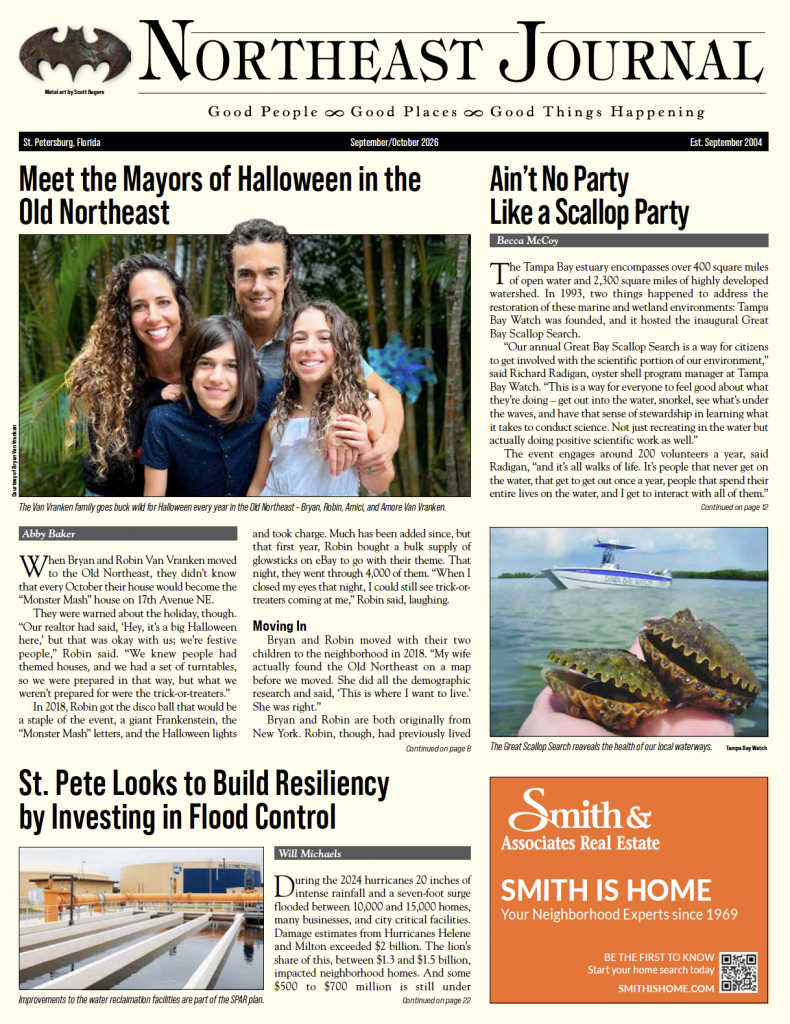
Immediate flood control projects include flood-proofing sewer treatment plants with deployable flood barriers and applying durable waterproof coating to exterior walls; installing a 15’ AquaFence at the city’s largest lift station (Lift Station 85 at the old Albert Whitted Water Reclamation facility); completing the Northeast Water Reclamation Facility electrical upgrade one year ahead of schedule; implementing a rebate program to repair leaking privately owned lateral sewer lines linking to city pipelines; and commencing installation of a new pump station at Salt Creek Basin near Lake Maggiore, a major flood-prone area.

Funding Stormwater and SPAR Projects
On June 12, the City Council Budget, Finance, and Taxation Committee met to discuss utility rates for next year’s budget and how to fund the accelerated SPAR Plan. The focus was on whether to fund SPAR out of increased utility fees or out of General Obligation Bond funding, or a combination of the two. Utilities include potable/drinking water, wastewater, stormwater, sanitation (trash pickup), and reclaimed/recycled water. The proposed capital budget for all utility-related programs and projects over the next five years is $960 million. This does not include accelerated SPAR funding. Including SPAR projects related to stormwater only would add another $271 million. Fifty percent of the cost of the original $760 million Stormwater Plan was to be paid out of utility funds (scheduled out over 20 years).
Currently, utilities are funded from the utility fees. Only 12% of residents use reclaimed water. Excluding reclaimed water, utility rates overall are projected to increase 8.55% next year or $12.75 per month for the typical customer using 3,500 gallons of water in 1601-3200 square feet of impervious surface area. The stormwater component of this would increase from $19.78 to $23.24 per month or 17.5%. The proposed FY26 stormwater budget includes a modest $16.4 million for SPAR projects, far short of the $271 million needed.
The stormwater component of the utility billing is based on the extent of impervious space covering the home or business parcel. Rationale for this fee is that the more impervious surface area, the less area for stormwater to be absorbed into the ground, contributing to increased risk of flooding and runoff of pollutants into the bays. If the $271 million in SPAR stormwater projects is funded entirely through utility fees, the stormwater rate increase would remain 17.5% in FY26, but be increased 20% in FY27. It would increase at 10%, 10%, and 7.5% respectively in the following three years.
A public referendum is required to approve any General Obligation Bond funding (referred to as a “Go Bond”). GO Bonds are paid for by an increase in property tax. Should the council decide to fund the accelerated SPAR projects through bonds a referendum would be held in November 2026. If approved then, bond funding would not likely be seen until 2027 or later.

At the next meeting of the Budget Committee, July 10 at City Hall, council will further discuss utility rates and options for funding the accelerated SPAR Plan projects. Given the urgency of the situation, some possible questions include whether consideration should be given to all possible sources of revenue to fund the accelerated SPAR, not just utility fees and bonds. This could include any increase in property tax collections due to new development or valuation and reallocation of current budget spending. Also, what can the city do to fund a significant part of the SPAR package next year, rather than starting later?
Learn more about the Stormwater Master Plan at tinyurl.com/stormwatermaster. Find the SPAR Plan tinyurl.com/SPARstpete.
Will Michaels is a member of the City Community Planning and Preservation Commission, Chair of the Council of Neighborhoods Association Committee on Flood Control Planning and Resiliency, and a member of the Tampa Bay Regional Planning Council Task Force on Resiliency. Reach him at wmichaels2222@gmail.com.